
The fiscal tilt towards capex benefits companies in investment-related sectors like capital goods, defence equipment, engineering & construction and metal & mining. The planned cut in revenue expenditure will weigh on companies in consumption sectors like FMCG, consumer durables and retail.

Under the defence partnership, India and the UAE are eyeing defence industrial collaboration and cooperation in advanced technologies, cyberspace training, special operations, interoperability of their militaries and counter terrorism.
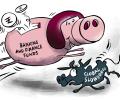
Even as banks and finance companies are reporting record-high earnings, their weighting in the benchmark National Stock Exchange Nifty50 Index has seen a downward trajectory. Investors expect a stronger performance from other sectors in the new year. Currently, banking, financial services and insurance (BFSI) companies collectively hold a weighting of 34.5 per cent, down from 36.7 per cent at the end of December 2022 and a record high of 40.6 per cent at the end of December 2019. This represents the sector's lowest weighting in the index since December 2021 when it stood at 33.7 per cent.
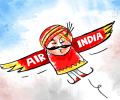
With the new owner shelling out Rs 18,000 crore for the buyout of 'Maharaja' this would be the highest ever amount garnered through privatisation or even the cumulative sum garnered through strategic sale in 1999-00 to 2003-04. The government had garnered roughly over Rs 5,000 crore during that five-year period by privatising 10 CPSEs.
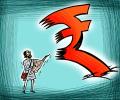
For first time in 8 yrs, stake sale proceeds could exceed Budget Estimates. ONGC's acquisition of HPCL alone could get the exchequer more than Rs 30,000 crore.

After a hiatus of nearly two decades, the government's programme to privatise state-owned firms restarted with the handing over of debt-laden national carrier Air India to the Tata Group. With the new owner shelling out Rs 18,000 crore for the buyout of the 'Maharaja', this would be the highest-ever amount garnered through privatisation, and is even more than the cumulative sum mopped up through strategic sales from 1999-00 to 2003-04. The government had in October last year inked the share purchase agreement with the Tata Group for sale of national carrier Air India for Rs 18,000 crore. Tatas would pay Rs 2,700 crore cash and take over Rs 15,300 crore of the airline's debt.

The Centre may overshoot the Rs 56,260 crore target for dividend receipts from central public-sector enterprises (CPSEs) set for FY25 and is likely to end up getting around Rs 65,000 crore this financial year, according to a senior government official. This excludes dividend from nationalised banks and financial institutions. As on October 21, the Centre collected Rs 28,913 crore as dividend and other investment from CPSEs, accounting for over 50 per cent of the Budget Estimate for FY25.

This will encompass the sale of Air India, a number of other privatisation initiatives, mergers, initial public offerings, the Centre's two exchange-traded funds, buybacks and offers-for-sale, and even monetisation of land assets.

There has been a sharp recovery in the headline corporate earnings in the April-June 2023 quarter (Q1FY24), after a dismal showing by early bird companies. The combined net profit of the 983 listed companies that have declared their quarterly results, so far, was up 64.7 per cent year-on-year to record a high of Rs 2.68 trillion in the first quarter, but growth in earnings remained lopsided because most of the incremental gains came from a handful of companies. Moreover, the quarterly numbers showed a continued slowdown in revenue growth.

Stocks of public sector undertakings (PSUs) have been on fire in the past year as investors cheered an improvement in key operating metrics and embraced counters of these state-owned enterprises, analysts suggest. The S&P BSE PSU Index has gained over 90 per cent in the past year, rising much higher than the S&P BSE Sensex, which has rose nearly 19 per cent during this period, according to ACE Equity data. The BSE PSU Index, reports show, has delivered a compound annual growth rate (CAGR) of 28 per cent (including dividends reinvestments) over five years and risen by almost 60 per cent in the past year.

A bonus is given to existing stockholders in proportion to the number of shares they already hold.
Air India sale will give a boost to India's privatisation drive, the Economic Survey said on Monday, as it suggested redefining the public sector role in business enterprises to encourage private participation in all sectors. The government earlier this month handed over ownership rights in national carrier Air India to Tata Group for Rs 18,000 crore. The amount includes the takeover of the debt burden of Rs 15,300 crore and another Rs 2,700 crore in cash.

Ajit Mishra, vice president, Research, Religare Broking, answers your queries.

Pawan Hans, Dredging Corp on list to meet target of Rs 800 bn for 2018-19

In all, 25 Chairman-cum-Managing Director (CMD) posts, 8 MD posts and 2 Chairman posts are lying vacant, according to a written reply by Minister of State for Heavy Industries and Public Enterprises P Radhakrishnan in the Lok Sabha.

The slowdown in corporate revenue growth over the last one year has begun to reflect in India Inc's capital expenditure, or capex. The country's top listed companies are going slow on fresh investment in capacity expansion, in line with a deceleration in their top line growth. The combined fixed assets of the listed companies, excluding banking, finance services and insurance (BFSI) and the government-owned oil & gas firms, were up 10.1 per cent year-on-year (Y-o-Y) during April-September 2023 (H1FY24) - the slowest in 18 months - as against 21.1 per cent Y-o-Y growth in H2FY23 (October 2022-March 2023) and 11.6 per cent growth in the April-September 2022 period (H1FY23).

The Department of Investment and Public Asset Management (Dipam) has asked ministries, government departments, and public sector undertakings (PSUs) to send a list of assets that can be monetised under the proposed National Monetisation Pipeline. The list will be used for creation of an asset monetisation dashboard, which will keep a track of such assets. The government, meanwhile, has asked CRISIL to prepare a road map for monetising assets of PSUs and government departments.

The run-up to next year's general elections might see some of the top executives of government-run companies getting unlucky. And, the period could become the best in the lives of those waiting in the wings.

A chunk of divestment till now has come from follow-on offerings in the Centre's two ETFs, Bharat-22 and CPSE. Now, there will be initial public offerings of Mazagon Docks, rail companies RVNL and IRFC and MSTC.
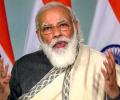
Human memory about policy issues is short. That alone can explain why many are deliriously happy with his latest slogans and ignore seven years of poor 'doing business' climate, taxtortion, extortionate oil prices, and high dependence on babus and the big State that has kept the enterprise system stifled, observes Debashis Basu.

As many as 20 central public sector enterprises and their units are at various stages of strategic disinvestment, while six are being considered for closure or are under litigation, Minister of State for Finance Anurag Singh Thakur said on Monday.

In the broader market, BSE Midcap and BSE Smallcap indices mirrored the gains in headline indices and rose 1% and 0.9% respectively.

Ajit Mishra, vice president, research, Religare Broking, answers your stockmarket queries.

Addressing his first rally in the national capital in the run-up to the February 8 Delhi Assembly polls, he said the current environment in the country, the hatred, the violence and the attacks on women were harming India and people were not benefitting from it.

#GiveItUp but no matching LPG connections for BPL

Government-owned companies are more generous in rewarding their shareholders with dividends.

Global crude oil prices have slumped by 49 per cent during the same period

About 48.5 million shares, or 20 per cent of the shares on offer, are reserved for retail investors

Govt diverts Rs 253-crore subsidy savings to the poor.

Most analysts expect growth in the sales of Nifty-50 companies to decelerate, albeit marginally, in the quarter ended December compared to the corresponding period of 2013-14, with metals and real estate companies pulling down earnings.

The department of investment and public asset management is scouting for investment bankers and legal advisors to carry forward the transactions.

Markets ended in green on rate cut hope.
Changing tracks helps. But, not taking the beaten path isn't always helpful. This is the story of two of India's biggest privatisations - Air India and Bharat Petroleum (BPCL). Nearly two decades after the last privatisation, a landmark divestment concluded this year when the loss-making national carrier Air India was sold to the Tatas.

'We aren't so unreasonable as to demand that he should have fully reversed Indira Gandhi's worst economic legacy, bank nationalisation.' 'But he could have made a beginning by selling off the two most stressed small public sector banks, and then announced that each year for the next 10, one government bank with the most messed-up balance sheet will be sold.' 'It would have electrified the markets, shocked his other banks into better behaviour, and marked his name among the great reformers,' argues Shekhar Gupta.

The third-quarter financials didn't excite market watchers. But equity investors can still make money if they invest in the right stocks.

Among Sensex constituents, HCL Tech suffered the most by diving 2.26 per cent, followed by HDFC shedding 2.10 per cent.

More than 40% of the companies surveyed showed job contraction in FY18, says a report by CARE Ratings

Ajit Mishra, vice president, Research, Religare Broking, answers your queries.
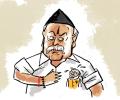
'By holding forth on Swadeshi economics, Bhagwat is showing his intent to fight back,' says Shekhar Gupta.
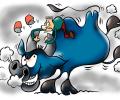
Ajit Mishra, vice president, Research, Religare Broking, answers readers' queries on stocks they own or want to buy.
 © 2026 Rediff.com - Advertise with us - Disclaimer - Privacy Policy - Sitemap - Feedback - About us - Terms of use - Grievances